Alex Simmons · 28 October 2026
Equilibrium Maintenance Strategies Shaping Long-Term Search Visibility in Competitive Online Spaces
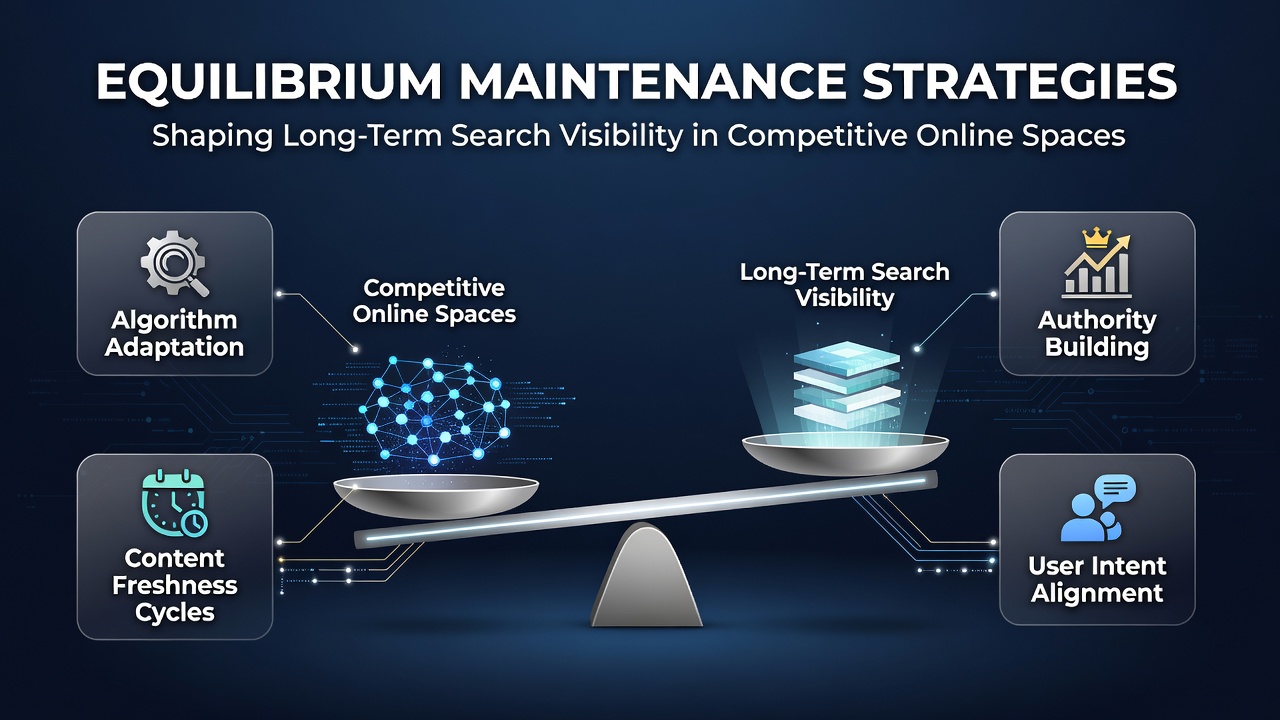
Search visibility in competitive online spaces depends on sustained equilibrium across multiple ranking factors, and organizations that monitor these elements over time often experience more stable positions in results pages. Data from industry analyses show that sites maintaining consistent performance across on-page optimization, backlink profiles, and technical infrastructure tend to recover faster from fluctuations triggered by algorithm adjustments.
Core Components of Equilibrium in Search Systems
Search engines evaluate websites through layered signals that interact dynamically, and equilibrium emerges when content relevance aligns with user engagement metrics while technical performance remains steady. Researchers at institutions such as the University of Melbourne have documented how imbalances in any single area, whether slow page speeds or thin content clusters, can shift visibility downward over months rather than days. Those who track these interactions report that periodic calibration prevents gradual erosion in competitive sectors like e-commerce and professional services.
Backlink acquisition forms one pillar, yet the quality and topical relevance of those links matter more than volume alone according to multiple longitudinal studies. Sites that diversify sources across regions and industries demonstrate greater resilience when search engines refine their evaluation criteria. In October 2026, several platforms observed ranking adjustments after updates emphasized entity relationships and real-world authority signals, prompting teams to review their link ecosystems rather than chase short-term gains.
Technical Infrastructure and Ongoing Calibration
Technical foundations underpin long-term visibility because crawl efficiency, structured data implementation, and mobile responsiveness directly affect how search engines interpret site content. Organizations that conduct quarterly audits of server response times and indexation rates often maintain steadier trajectories than those addressing issues reactively. Evidence from performance tracking tools indicates that even minor persistent errors, such as redirect chains or duplicate metadata, accumulate and influence equilibrium negatively across extended periods.
Adaptation strategies include implementing monitoring dashboards that aggregate metrics from multiple sources, allowing teams to detect deviations early. One analysis of enterprise websites revealed that those integrating automated alerts for core web vitals maintained higher average positions during algorithm refreshes compared with peers relying on manual reviews alone. The process involves cross-referencing server logs with search console data to identify patterns that might otherwise go unnoticed until visibility drops occur.
Content Strategies That Support Sustained Balance
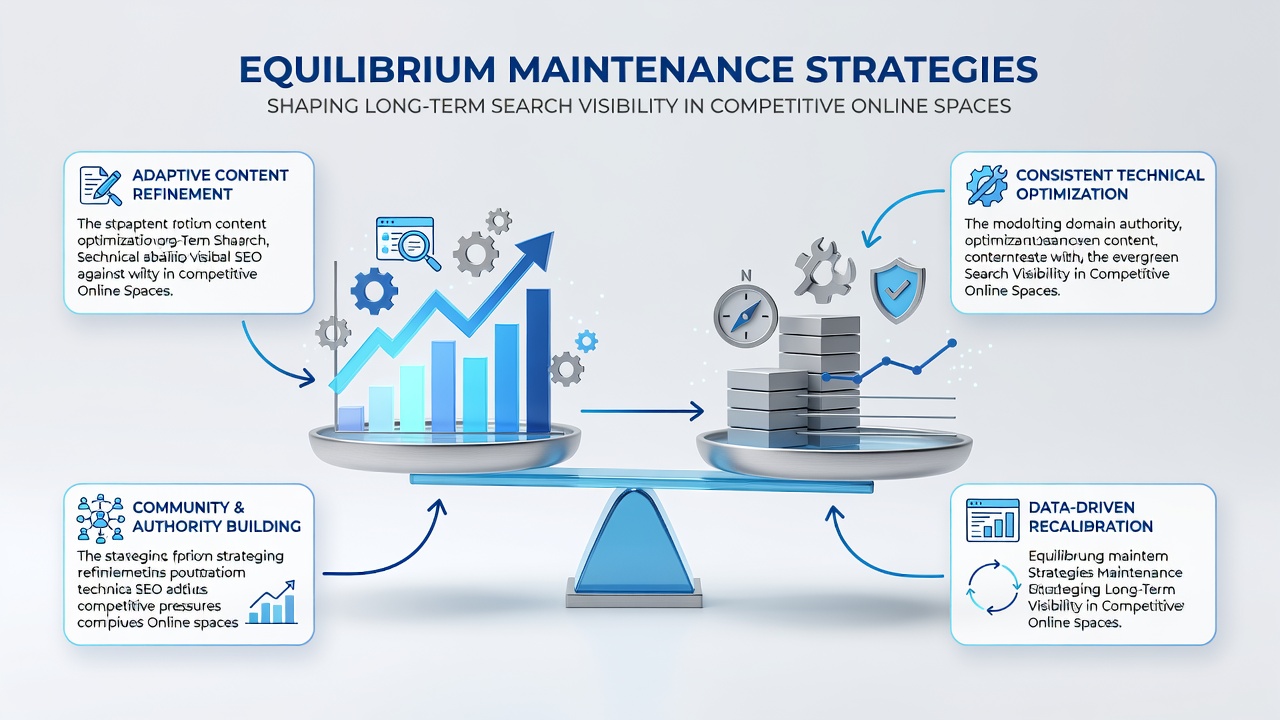
Content development plays a central role in equilibrium maintenance because freshness, depth, and alignment with user intent help stabilize engagement signals that search algorithms reward. Teams updating cornerstone pages on a scheduled basis while introducing supporting materials around emerging subtopics tend to preserve rankings more effectively in saturated markets. Studies tracking audience behavior across thousands of domains indicate that pages combining comprehensive coverage with clear navigation structures retain visitors longer, which in turn reinforces visibility.
Competitive spaces require differentiation through original research or unique data presentations rather than replication of existing material. Observers note that sites incorporating user-generated elements or interactive components often see compounding benefits as these features generate additional signals of authority. Regular content audits, performed at intervals of six to twelve months, help identify underperforming sections before they drag down overall site equilibrium.
Monitoring Practices and Adaptive Responses
Continuous observation of ranking data, traffic sources, and competitor movements provides the feedback loop necessary for maintaining equilibrium. Platforms that combine internal analytics with third-party visibility trackers gain clearer pictures of how external changes affect their positions. Figures from global digital reports highlight that proactive adjustments, such as refining internal linking structures or refreshing meta descriptions, correlate with steadier performance curves during competitive pressure periods.
External resources like the Federal Trade Commission guidelines on digital practices offer frameworks for transparent operations that indirectly support trust signals valued by search systems. Similarly, academic publications from Canadian research centers on information retrieval have outlined models for evaluating ranking stability that teams can adapt to practical workflows.
Conclusion
Equilibrium maintenance in competitive online search environments requires coordinated attention to technical, content, and linkage factors over extended timelines. Organizations applying systematic monitoring and measured responses to observed shifts position themselves for more consistent visibility outcomes. Data across multiple sectors confirms that balanced approaches outperform reactive tactics when algorithm conditions evolve.