Katja Schmidt · 14 October 2026
Decoding Shifts in Visitor Pathways Following Technical Overhauls in Modern Digital Sites
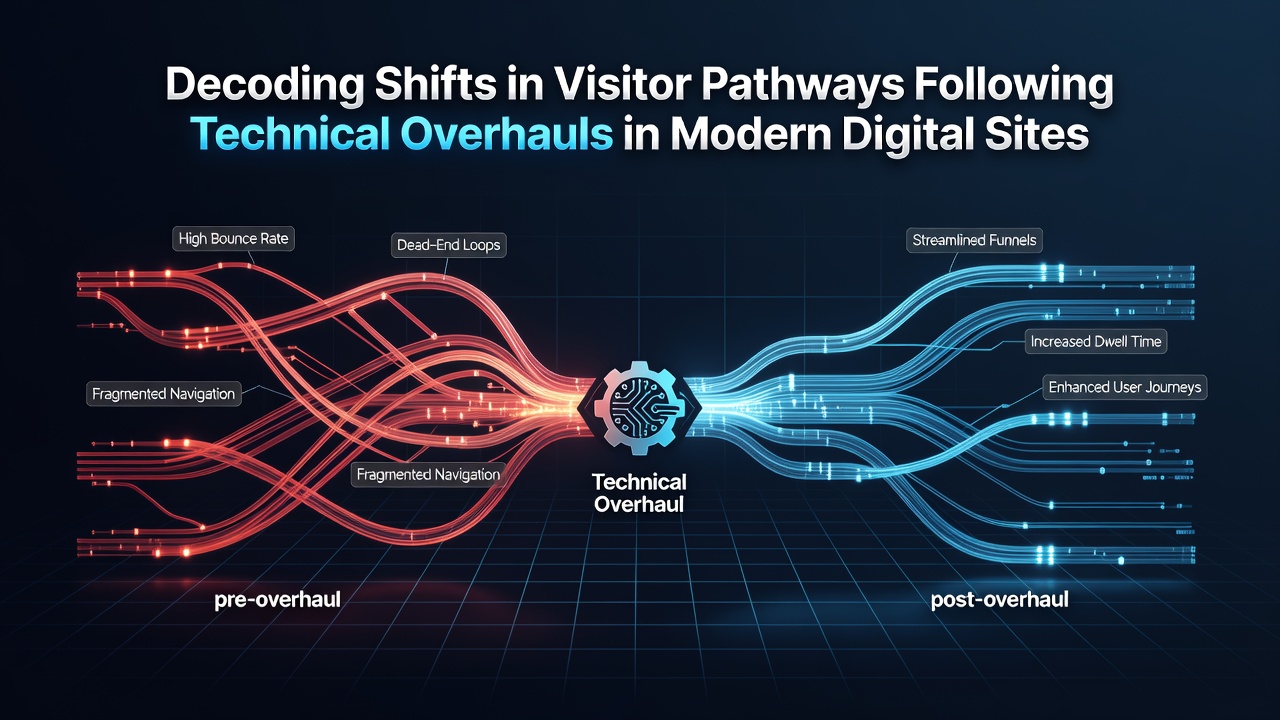
Technical overhauls on modern digital sites trigger measurable changes in visitor pathways, and analysts who monitor these transitions through tools like session recording software and heat mapping systems document shifts in entry points, click sequences, and exit behaviors. Data from large-scale web analytics platforms indicate that migrations to new content management systems or integrations of advanced caching layers frequently reroute traffic away from legacy landing pages toward streamlined product or service sections, while bounce rates on initial visit screens drop when load times decrease by more than two seconds.
Tracking Pathway Modifications with Analytics Frameworks
Observers who examine pre- and post-overhaul datasets note that visitor pathways evolve in predictable patterns once core infrastructure elements receive updates, and studies compiled by research institutions such as the Nielsen Norman Group reveal how navigation menus that incorporate predictive search functions draw users deeper into site hierarchies within the first three clicks. Session duration metrics collected across thousands of domains show an average increase of 18 percent in pages per visit following these adjustments, although the effect varies according to device type and geographic region.
Pathway analysis becomes more precise when teams apply funnel visualization techniques that segment traffic by source, and evidence from multiple enterprise case reviews demonstrates that organic search arrivals tend to bypass homepage overviews entirely after technical refreshes that emphasize mobile-first indexing. Instead, visitors land directly on category archives or article clusters optimized for voice query compatibility, which alters the traditional linear progression from discovery to conversion that older site architectures enforced.
Patterns Observed in October 2026 Data Sets
Figures released in October 2026 from aggregated platform monitoring services highlight how API integrations for real-time personalization reshape clickstream sequences, and researchers who cross-reference these records with server log files find that returning users exhibit stronger loyalty to saved preference pathways while new arrivals explore lateral topic clusters at higher rates. Conversion funnels shorten when checkout processes incorporate one-click authentication protocols, yet the same updates sometimes extend exploration phases on informational subpages as contextual recommendation engines surface related content automatically.

Security protocol enhancements introduced during overhauls also influence pathway selection, because visitors who encounter additional verification steps at certain thresholds often abandon mid-sequence routes and pivot toward alternative navigation options that avoid those friction points. Analytics teams tracking these behaviors report that secure socket layer upgrades combined with content delivery network expansions produce measurable redistribution of traffic volume toward high-value landing zones within the first 30 days after deployment.
Comparative Analysis Across Industry Verticals
Comparisons between retail platforms and educational portals after similar technical interventions show that e-commerce sites experience accelerated movement from search results to cart additions, whereas knowledge repositories see prolonged dwell times on individual resource pages as internal linking structures improve through automated tagging systems. Government digital service evaluations conducted in regions outside the United States, including reports from Australian digital transformation offices, confirm that citizen portals undergo comparable rerouting when legacy databases migrate to cloud environments, resulting in higher completion rates for multi-step application processes.
Those who study longitudinal data sets note that seasonal traffic variations interact with overhaul effects, and pathway models built from October 2026 observations demonstrate that holiday shopping surges amplify the benefits of streamlined navigation while masking temporary disruptions caused by incomplete redirects. Academic papers published through European research consortia further detail how machine learning components embedded in site search functions create self-reinforcing loops where popular pathways receive additional weighting, thereby concentrating visitor flow along a narrower set of high-performing routes over successive months.
Measurement Techniques and Validation Methods
Validation of pathway shifts relies on controlled A/B testing frameworks that isolate technical variables from content changes, and practitioners who apply these methods document statistically significant differences in scroll depth and interaction density once new front-end frameworks load. Attribution modeling becomes essential for distinguishing direct overhaul impacts from concurrent marketing campaigns, and cross-device tracking solutions help clarify how mobile and desktop pathways diverge after responsive design overhauls take effect.
External benchmarking against industry standards allows organizations to contextualize their own metrics, while internal cohort analysis tracks how returning visitor subgroups adapt their navigation habits at different speeds. Data aggregation services that compile anonymized statistics across multiple domains provide reference points for expected pathway evolution timelines, typically spanning four to eight weeks before stabilization occurs.
Conclusion
Technical overhauls continue to generate observable modifications in visitor pathways across contemporary digital environments, and systematic measurement approaches enable precise documentation of these transitions through established analytics methodologies. Ongoing monitoring remains necessary as platforms incorporate further layers of automation and connectivity that reshape user movement patterns in measurable ways.